Room
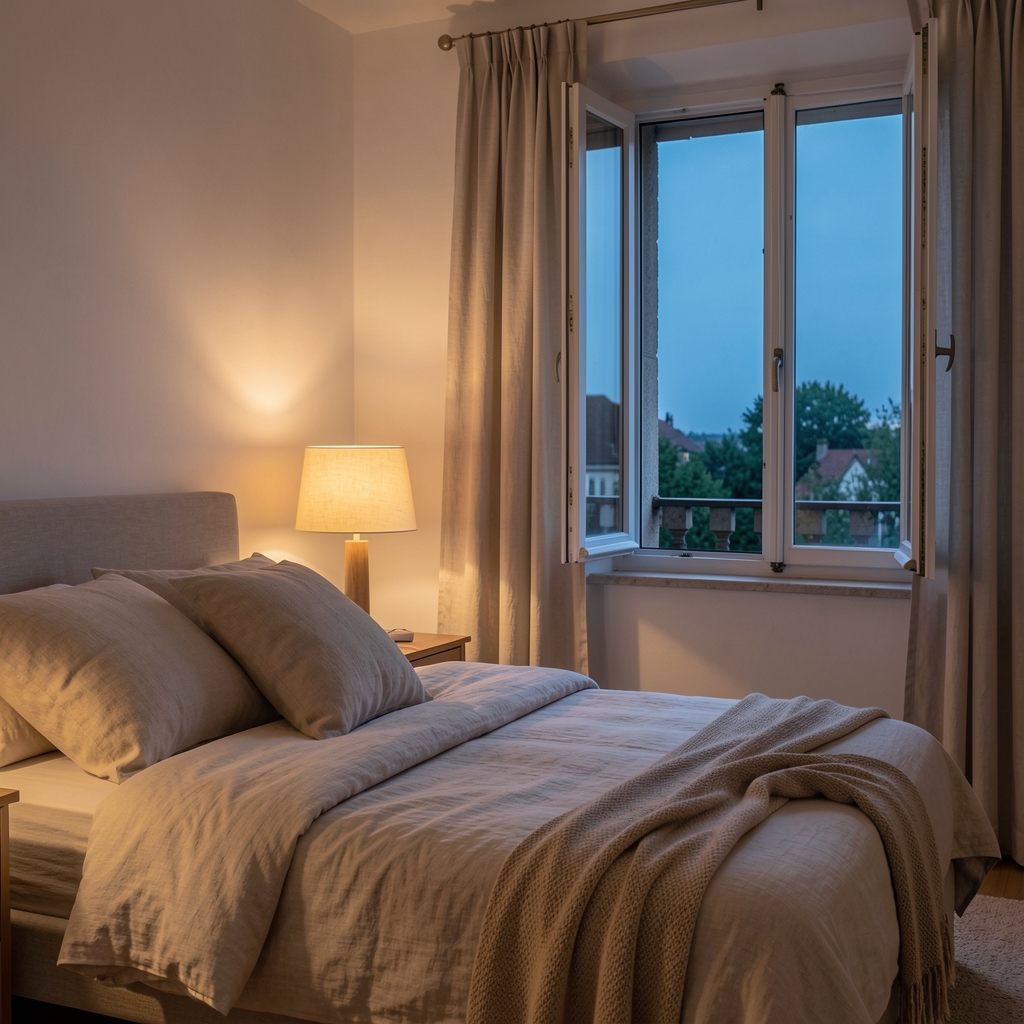
Temperature, noise, bedding and darkness all contribute to whether the room feels inviting.
Helian looks at the surroundings, routines and expectations that influence how men beyond 30 approach rest.
Sleep is not a performance to win. It is a period of restoration shaped by light, timing, activity, food, technology and the thoughts that arrive when a room becomes quiet.
Rather than changing everything at once, observe one evening transition. A consistent sequence can make the bedroom feel associated with rest, while flexibility keeps the routine realistic during travel or family responsibilities.
| Variable | Observation | Experiment |
|---|---|---|
| Light | Bright light late in the evening | Use warmer, lower lighting for the final hour. |
| Stimulation | Messages and news continue in bed | Charge the phone away from the pillow. |
| Timing | Bedtime changes widely | Keep a broadly consistent wake time where possible. |
Temperature, noise, bedding and darkness all contribute to whether the room feels inviting.
A repeating wind-down cue helps separate work, entertainment and rest.
A difficult night is data, not a verdict. Return to the routine without dramatic correction.
Persistent sleep disruption, loud snoring, breathing pauses, unusual movements or significant daytime impairment deserve a conversation with a qualified clinician. General lifestyle reading cannot identify the cause.
Keep the environment calm, avoid clock-watching and use a quiet activity if you remain alert. Seek professional advice when the pattern continues.
A broad rhythm is often more practical than a perfect schedule, particularly for shift work, travel or caregiving.
Movement can be part of a balanced day, but timing and intensity differ between people. Observe your own response.